Ecofriendly pet toys have picked up a lot of attention lately, especially among pet owners who want their four legged friends to be happy without adding to the world’s waste problem. Toys made from recycled materials aren’t just good for the environment; they’re also usually pretty tough and totally safe for your pet to chew, chase, or cuddle. In this article, I’ll guide you through everything you need to know about choosing ecofriendly pet toys for both cats and dogs, and how these toys can make playtime more sustainable while still being loads of fun.
What Makes a Toy Ecofriendly?
Ecofriendly pet toys usually mean more than just using sustainable materials. In my experience, a genuinely green toy comes from recycled or natural sources, gets processed with minimal chemicals, and is built to last so it doesn’t end up in the trash right away. There are more options than ever, from plushies made of recycled plastic bottles to chew toys crafted out of upcycled rubber and fabric scraps. Picking out these toys can help reduce landfill waste and lessen the demand for new, resource heavy plastics.
Here’s what helps a toy qualify as ecofriendly:
- Recycled Content: Toys made from second life materials like reclaimed cotton, polyester from old bottles, or recycled rubber tires.
- Minimal Packaging: Some brands skip the flashy boxes and stick-on plastic ties to keep extra waste out of the picture.
- Safe & Nontoxic: Nontoxic dyes and chemical free processing help make sure your pets aren’t exposed to anything sketchy.
- Durability: Sturdy toys that last longer mean you won’t need to buy, or toss, replacements as often.
Why Ecofriendly Pet Toys Matter
Every time I buy a recycled toy for my pets, I know I’m making a decision that shrinks my carbon footprint a bit. The pet toy industry is massive; estimated in the billions, and traditional toys mostly use new plastics and synthetic fillers, which take ages to break down in landfills. Washing and manufacturing these materials also create greenhouse gas emissions.
Ecofriendly toys bring a few cool benefits for both pets and owners, such as:
- Using fewer new resources, which saves water and energy
- Offering creative, often handmade designs
- Giving pet owners peace of mind because materials are usually vetted for nontoxicity
- Keeping more stuff out of landfills and oceans
What Types of Ecofriendly Toys are Available?
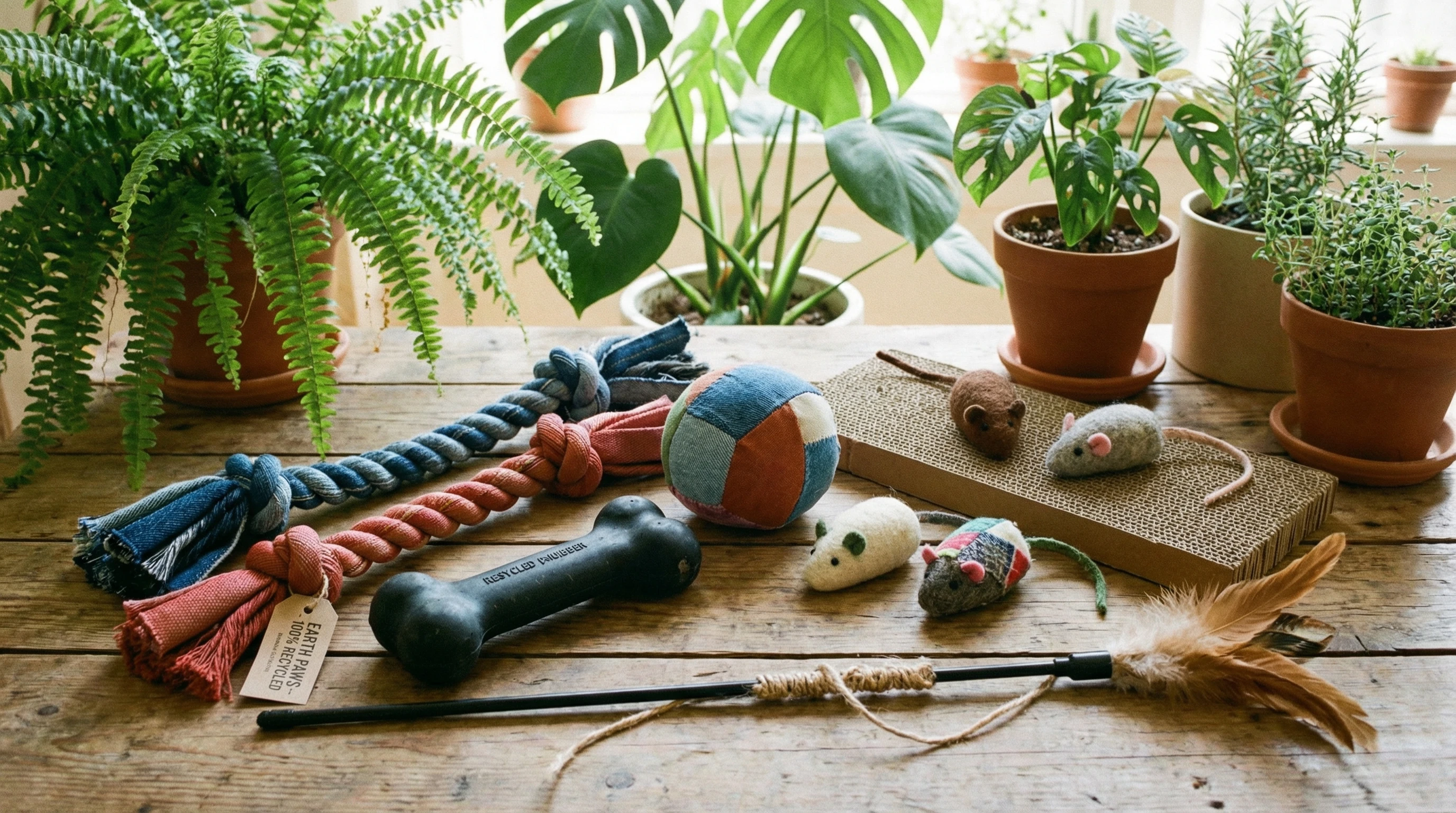
There’s a solid range of options whether you have a playful pup or a curious cat. Here are some of my favorites that my dogs and cats have loved, all made from recycled materials:
- Rope Toys: Usually made of recycled cotton or polyester threads twisted together. Perfect for tug-of-war or chewing.
- Plushies and Stuffed Toys: These can be made from upcycled fabric or filled with stuffing from old water bottles. Great for gentle dogs and cats who like to cuddle their toys.
- Chew Toys: Brands have started making durable chews from recycled natural rubber or upcycled plastic scraps.
- Catnip Toys: Some companies take postconsumer fabric, sew it into cute shapes, and fill it with organic catnip. Super popular in my house.
- Food Puzzle Toys: For dogs and cats who like a challenge, these toys are often crafted from recycled plastics, giving pets both mental and physical stimulation.
- Ball Toys: Recycled tennis balls or ones made from upcycled rubber are easy to find and keep dogs running back for more.
How Are These Toys Made?
Most recycled pet toys start their adventure as something totally different, like an empty water bottle or the rubber from used tires. The materials are sanitized, treated safely, and then broken down before being formed into new products. Advanced recycling processes can melt old plastics and turn them into fibers for plush toys, or grind rubber down for chewable items. The process is a great example of turning what’s normally trash into something that brings a lot of joy to pets.
I’ve seen some small businesses using denim scraps, old T-shirts, or leftover fleece as the main ingredient for soft toys, giving discarded clothes a new life. Check for companies that share info about their process or certifications that show they’re really using ethical, low impact production. Also, many local artisans host workshops or share DIY guides online, making it easy for pet owners to get creative with upcycling projects at home—like sewing simple toys from old socks, jeans, or unused bedding. Not only does this reduce waste, but it can also lead to a unique bonding activity with your pet and even create hypoallergenic toys for pets with sensitive skin.
How to Choose the Best Ecofriendly Toy for Your Pet
The best toy for your pet is one that matches their play style and isn’t a hazard. Here are some things I look for every time I’m shopping for a new sustainable toy for my crew:
- Match the toy to your pet. Tough chewers need more durable toys, while gentler pets (including many cats and older dogs) can get by with plush options.
- Check for safety. Make sure the stitching is solid and the toy isn’t too small. Small parts that could come off and get swallowed are a no-go.
- Look for washable materials. Extra points if you can toss the toy in the washing machine or give it a scrub with natural soap. This keeps everything fresh and safe for gnawing.
- Investigate the company’s claims. Some products sound environmentally friendly but aren’t actually made from much recycled content (“greenwashing” is real). Reading reviews and checking certifications like GRS (Global Recycled Standard) is super helpful.
You’ll also want to keep an eye on your pet’s play habits. Some dogs and cats love to shake or tear at their toys, while others just carry them around gently. Picture how your pet usually plays, and choose accordingly. For puppies or kittens with sharp little teeth, tightly woven fabric toys might last longer; for senior pets with gentle mouths, soft plush toys work great. And remember, always supervise play with new toys and regularly inspect them for any rips or damage.
Common Questions About Ecofriendly Pet Toys
Are recycled toys safe for chewers?
Recycled rubber and fabric are usually as tough, or sometimes even tougher, than standard materials if processed right. Always choose toys labeled as safe for strong chewers if your dog tears things apart fast.
Will my cat or dog notice the difference?
In my house, my pets never seem to care about what their toys are made of as long as they’re fun to chase or snuggle. The bonus is getting peace of mind knowing you’re buying something more responsible.
How do I know if a company is truly sustainable?
Look for transparency on labels and websites. Many companies explain their process, post certifications, or share partnerships with recycling or earth friendly initiatives. Checking for community outreach or certifications is an added sign they walk the talk.
Are ecofriendly toys more expensive?
Sometimes, but not always. There is a trend toward affordable Eco safe pet toys, especially as the market grows. In my experience, paying a little extra for a quality, recycled toy often means it’ll last longer and keep my wallet happy in the end.
Extra Tips for Eco minded Pet Owners
I like doubling up my efforts by keeping toys out of the landfill for as long as possible. Here’s how I squeeze a little more life and kindness to the earth from every purchase:
- Rotate toys every week to keep things exciting and prolong wear and tear.
- Repair small rips or tears in fabric toys before tossing them.
- Repurpose old toys; an old tug rope can become a treat dispenser if you tie a treat inside, for example.
- When a toy really bites the dust, check to see if it can be recycled again or upcycled for crafts. Ask your local pet store or recycling center for guidance if you’re not sure what is accepted in your area. In many cases, local shelters also welcome gently used pet toys, so donating is a great option to keep items in use longer.
Choosing Greener Toys for Happier Pets and a Healthier Planet
Ecofriendly pet toys made from recycled materials aren’t just about following a trend. They’re a real step toward less waste in our homes and better lives for our pets. Whether your best pal is a dog or a cat, making small switches in the toys you buy can help reduce pollution, shrink your carbon footprint, and support companies doing good work for the planet. With so many eye-catching designs out there, playtime never has to feel like a compromise, and you and your furry companions can have fun while doing your part for the environment.